
Stainless Steel Drawer Slides for Industrial Cabinets
Corrosion-resistant 304/316 slides for harsh industrial environments
When Standard Steel Fails
Chemical labs, food processing plants, marine engine rooms, pharmaceutical cleanrooms, and offshore platforms share one characteristic: the environment actively attacks carbon steel. Chloride ions, acidic vapors, washdown chemicals (NaOH, quaternary ammonium), and humidity cycles penetrate zinc within weeks.
Failure progression: zinc white rust (zinc oxide) forms -> base metal corrosion at edges/scratches -> raceway pitting -> drag increases 300-500% -> operators force drawers -> rails bend -> complete failure. In food processing, this completes in 3-6 months. In pharma cleanrooms, even white rust particles contaminate the controlled environment.
Cost of failure exceeds replacement hardware: production downtime, contamination investigations, regulatory findings, and in food/pharma, potential recalls. This is why stainless - despite 2-3x premium - is economically rational.
Stainless Solution
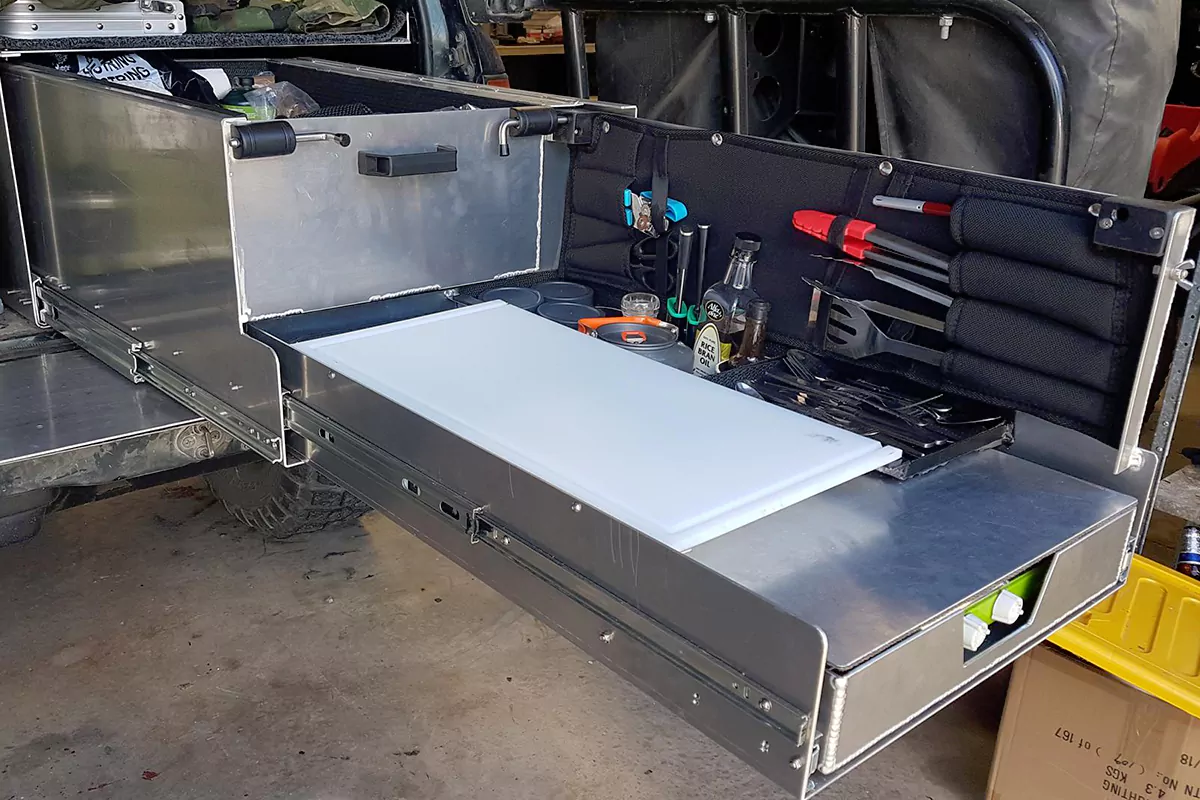
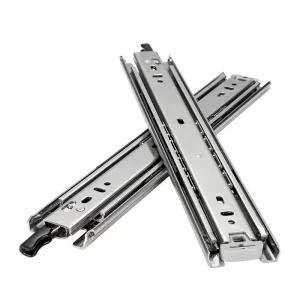
BWD stainless industrial slides use fully homogeneous stainless construction - not stainless-clad carbon steel (which still corrodes at cut edges). Every component is stainless: rails (304 or 316L), ball cage, balls, and mounting hardware.
304 stainless: general corrosion resistance, food processing, pharma, general wet. Handles most washdown chemicals at concentrations used in standard CIP (clean-in-place) cycles. Cost-effective choice for 80% of corrosive applications.
316L stainless: adds 2-3% molybdenum for chloride/pitting resistance. Required for: marine (saltwater splash), chemical labs (HCl, H2SO4 fumes), bleach-based sanitizing (dairy, brewery), and coastal facilities.
Load ratings: 50-250 lb. Full-extension with lock-out for maintenance access. Surface finish: 2B (standard mill) or electropolished (Ra <0.4 micron) for pharma/biotech cleanrooms.
Compliance: FDA 21 CFR 175.300, NSF/ANSI 2, EU 1935/2004 (food contact materials). NACE MR0175 compatible for oil & gas applications.
Recommended Products
FAQ
Detailed Selection Notes
Stainless slide specification for industrial cabinets:
Grade selection: Map your chemicals to the corrosion resistance chart. If any exposure to chlorides >200 ppm, hypochlorite bleach, or saltwater = 316L mandatory. Otherwise 304 is sufficient and saves 20-30%.
Surface finish: Standard 2B mill finish for most industrial. Electropolished for pharma/biotech cleanrooms (reduces particle shedding, easier to clean, prevents bacterial harbor). Note: electropolish adds 15-20% cost.
Load + length: Same sizing rules as carbon steel (25% headroom on loaded weight). Stainless does not affect load ratings - BWD uses thicker gauge (1.4 mm vs 1.2 mm for carbon steel equivalent) to compensate for slightly lower yield strength.
Lubrication: Standard food-grade silicone grease for ambient to +80C. High-temp synthetic for autoclave environments. For full-washdown applications, specify our dry-film PTFE lubricant variant (eliminates grease washout but requires 10,000-cycle re-application).
Documentation: For FDA/EU audits, BWD provides material certificates (EN 10204 3.1), surface roughness reports, and food-contact declarations per order. Available within 48 hours of shipment.
Customization Available
Custom Length
10"–30" lengths to your spec
Custom Finish
Zinc, black, white powder coat, stainless
Custom Locking
Lock-in / lock-out / dual lock
Private Label
OEM stamping and packaging